


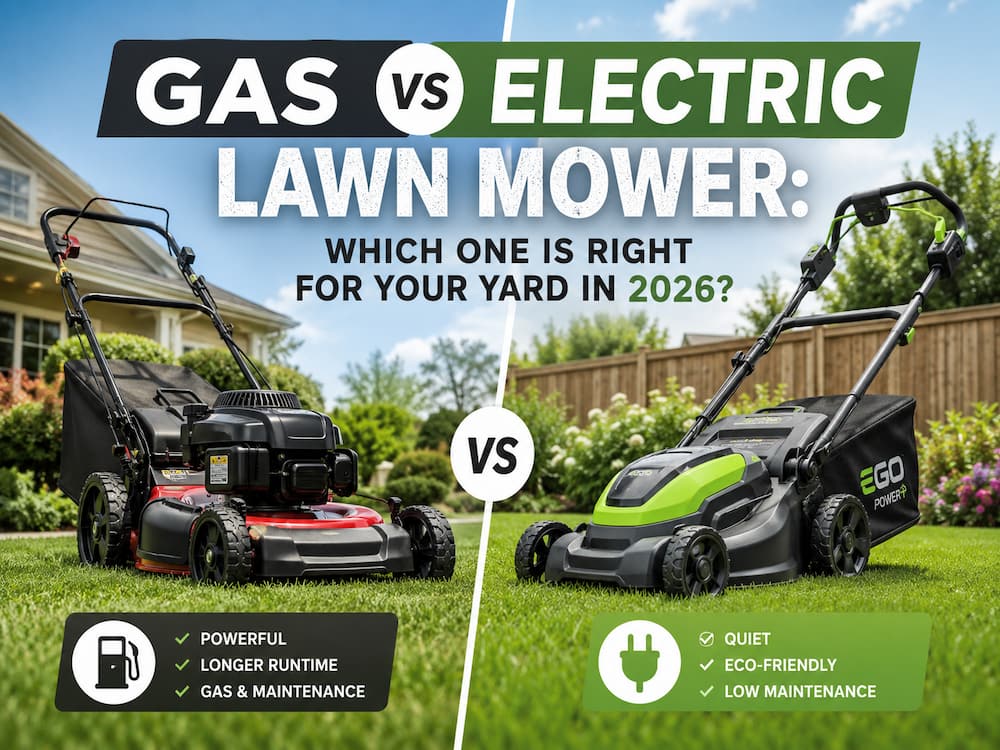
For decades, the standard soundtrack of American suburban weekends was the distinct roar of a pull-start, gas-powered lawn mower. But as we move through 2026, pulling that cord feels less like a classic chore and more like an expensive, legally complicated relic of the past.
If you are standing in the home improvement aisle or browsing online for a new mower this season, the decision isn’t just about horsepower anymore. It’s about navigating skyrocketing fuel prices, sweeping environmental laws, and rapid advancements in battery tech.
So, between gas and electric, which one actually makes sense for your property today? Let’s break down the economics, the regulations, and the reality of yard care in 2026.
The New Reality: $4+ Gas and Green Mandate Policies
Two major shifts have completely rewritten the mower-buying playbook this year: the cost at the pump and the law.
First, let’s talk numbers. The national average for regular gasoline has stubbornly hovered well over $4.00 per gallon this summer, with coastal states like California creeping closer to the $6.00 mark. Suddenly, the ongoing cost of keeping a gas can filled in your garage is a serious line item in the household budget.
Second, the policy landscape has shifted from “incentivizing” electric to mandating it.
- California has officially enacted its strict small off-road engine (SORE) regulations, banning the sale of newly manufactured gas-powered lawn mowers and handheld garden tools.
- Connecticut and several Northeastern municipalities (like Greenwich and New Canaan) have aggressively ramped up localized seasonal bans and severe noise ordinances targeting internal combustion landscaping equipment.
If you live in these regions, buying a new gas mower is either illegal or heavily restricted. Even if your state hasn’t passed a full ban yet, the writing is on the wall: the outdoor power equipment industry has gone electric.
Doing the Economic Math: Large Acreage vs. Standard Suburbs
Despite the political and pricing pressures, the “right” choice still heavily depends on the physical footprint of your property.
The Large Yard (0.5 Acres and Above): Why Gas Still Hangs On
If you manage a sprawling property of a half-acre or more, gas mowers—particularly riding mowers and heavy-duty zero-turns—still hold a distinct operational advantage.
To mow an acre of dense, overgrown grass with a battery-powered riding mower, you often need multiple expensive 56V or 80V lithium-ion batteries. A single replacement battery pack can cost upwards of $300 to $500. For large properties, the high upfront cost of electric equipment, combined with eventual battery degradation, means a commercial-grade gas mower can still make financial sense—even with $4.25/gallon fuel. Gas delivers raw, sustained torque and zero runtime anxiety; when you run out of juice, you refill the tank in 30 seconds rather than waiting hours for a charging dock.
The Standard Suburban Yard: Why Lithium-Ion Wins the Economic Pocketbook
For properties under a half-acre (which represents the vast majority of American suburban homes), buying a gas mower in 2026 is frankly a bad investment.
A standard cordless electric push mower easily handles a 1/4-acre lot on a single charge. When you look at the total cost of ownership over a 5-year period, electric completely decimates gas:
| Cost Category | Gas Walk-Behind Mower | Battery-Powered Electric Mower |
| Fuel / Energy | ~$4.00+ per gallon (Frequent refills) | Cents per charge on your electric bill |
| Maintenance | Oil changes, spark plugs, air filters, carb cleanings | None (Just sharpen the blade) |
| Storage Friction | Winterization, gas stabilizer, smell of exhaust | Fold up and store vertically anywhere |
With zero engine maintenance and no fuel costs, a standard electric mower pays for its upfront price gap within the first two seasons.
The Ultimate 2026 Upgrade: Robot Lawn Mowers
If you decide to cross over to the electric side, you aren’t limited to just pushing a plastic battery box around your yard anymore. The smartest adaptation to the 2026 climate isn’t just going electric—it’s going autonomous.
For homeowners who want to completely bypass both high gas prices and weekend labor, intelligent solutions like the MOVA Robot Lawn Mower have completely revolutionized residential lawn care.
Rather than spending your Saturday morning pushing a mower in the heat, robotic mowers operate quietly on a scheduled routine, maintaining your grass at a constant, pristine height. Because they are 100% electric, they comply perfectly with the strictest noise ordinances in Connecticut and emission laws in California. They charge themselves via a low-profile home dock, costing pennies a month in electricity, and utilize advanced obstacle avoidance to navigate around yard toys, trees, and pets. It’s the ultimate way to future-proof your yard while clawing back your free time.
The Verdict: What Should You Buy?
The choice in 2026 comes down to a clear dividing line:
- Choose Gas if: You own more than 0.5 to 1 acre of land, live in a state without active small-engine sales bans, and need continuous, heavy-duty cutting power without stopping to recharge.
- Choose Electric (or Robotic) if: You have a standard suburban yard, live in a region with tightening environmental/noise regulations, and want to permanently opt out of $4.00/gallon fuel prices and annoying engine maintenance.
The era of fossil-fuel lawn care is entering its twilight. For most homeowners, making the switch to lithium-ion or an automated system like MOVA isn’t just an environmentally friendly gesture anymore—it’s the smartest financial move you can make for your home this year.
